SKC Algorithm – Comprehensive Management of Atrial Fibrillation
Comprehensive management of atrial fibrillation (AF) is based on three pillars:
- Prevention of stroke and thromboembolism using anticoagulation therapy
- Adequate treatment of comorbidities and elimination of risk factors
- Elimination of AF (maintenance of sinus rhythm) or alleviation of AF symptoms
Compendium of recommendations for AF (2026) uses the SKC algorithm for the treatment of AF; the abbreviation SKC stands for:
- SK – Slovakia
- C – CINRE, the cardiology centre where the author of the guidelines works: Peter Blahut
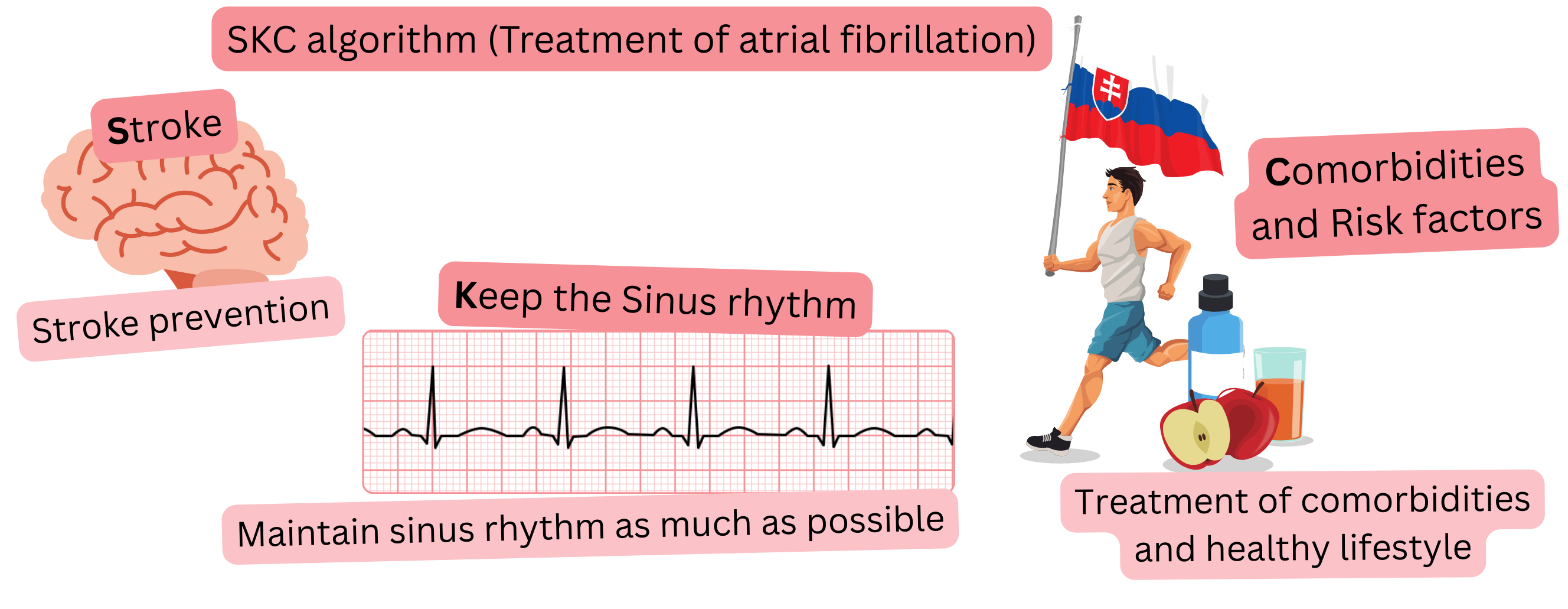
| SKC Algorithm (Comprehensive Management of Atrial Fibrillation) |
| S |
Stroke
- The goal is to prevent stroke and thromboembolism using anticoagulation therapy.
- Anticoagulation therapy is indicated according to the CHA2DS2-VA score.
|
| K |
Keep the Sinus Rhythm
- The goal is to maintain sinus rhythm using:
- antiarrhythmic therapy
- pulsed field ablation
- During sinus rhythm, symptoms are reduced and often disappear.
- If sinus rhythm cannot be maintained, the strategy is rate control.
|
| C |
Comorbidities and Risk Factors
- The goal is adequate treatment of comorbidities and elimination of risk factors.
|
Comprehensive AF management according to the SKC algorithm:
- Is the same for all patients with AF, regardless of AF classification by episode type (paroxysmal, persistent, permanent).
- If substantial modification of comorbidities and risk factors is achieved,
- regression of AF may occur: persistent → paroxysmal AF.
- Complete disappearance of AF is rare (<10%).
- Maintenance of sinus rhythm is primarily supported by antiarrhythmic therapy and ablation.
Several algorithms for AF management exist, all based on common principles: stroke prevention, rhythm or rate control, and treatment of comorbidities and risk factors. In clinical practice, the following algorithms are used:
SKC algorithm
- S (Stroke)
- K (Keep the Sinus Rhythm)
- C (Comorbidities and Risk Factors)
ABC algorithm (European Guidelines 2020, Asian Guidelines 2021):
- A (Avoid Stroke)
- B (Better Symptom Management)
- C (Cardiovascular and Other Comorbidities / Risk Factors)
SOS algorithm (American Guidelines 2023)
- S (Stroke risk assessment and treatment)
- O (Optimize all modifiable risk factors)
- S (Symptom management)
AF-CARE algorithm (European Guidelines 2024)
- AF (Atrial Fibrillation)
- C (Comorbidities and risk factors)
- A (Avoid Stroke)
- R (Reduce symptoms by rate and rhythm control)
- E (Evaluate and reassess)
| SKC Algorithm – Comprehensive Management of Atrial Fibrillation |
Class |
| Comprehensive AF management is recommended according to the SKC algorithm. |
I |
| Comprehensive AF management is identical regardless of AF classification by episode type (paroxysmal, persistent, permanent). |
I |