Electrophysiology CINRE, hospital BORY

Propafenone


Classification:

  • Class IC – Sodium (Na⁺) channel blockers
    • Propafenone – slows conduction in atrial myocardium and is also a non-selective beta-blocker
    • Flecainide – slows conduction in atrial myocardium
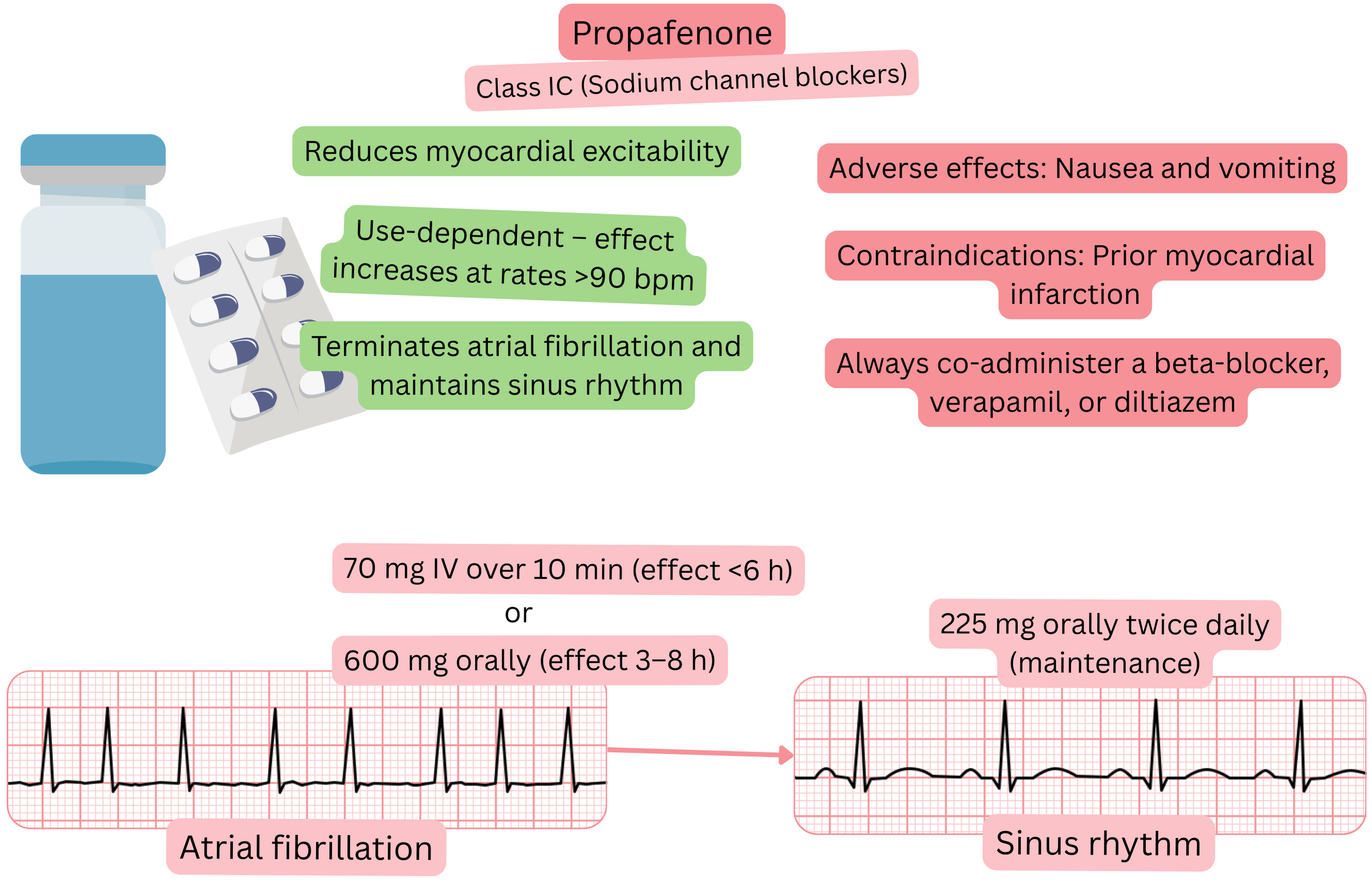
Diagram of the effect of propafenone as a class IC antiarrhythmic illustrating use-dependent sodium channel blockade, reduced myocardial excitability, and pharmacological cardioversion of atrial fibrillation to sinus rhythm.

Mechanism:

  • Slows conduction in myocardium, reduces myocardial excitability and automaticity
    • Inhibits the non-nodal action potential (in myocardium)
  • Is use-dependent (effect increases at heart rate > 90/min.)
  • Is a weak non-selective beta-blocker
    • The beta-blocking effect increases with higher doses of propafenone

Effect on AF:

  • Maintenance of sinus rhythm – prevents recurrence of atrial fibrillation (AF)
  • Cardioversion of AF to sinus rhythm – termination of the AF episode and restoration of sinus rhythm
    • “Pill in the pocket” strategy – single oral dose of propafenone taken at home at the onset of an AF episode.
      • The goal is restoration of sinus rhythm
Propafenone and atrial fibrillation (AF)
Brand names
Rytmonorm, Rythmol, Arythmol, Cuxafenon, Nistaken, Propafenon Hexal, Jutanorm
Indications
  • Acute cardioversion of AF to sinus rhythm
    • “Pill in the pocket” strategy
  • Maintenance of sinus rhythm
Dosing
  • Acute cardioversion of AF to sinus rhythm (intravenous)
    • 1–2 mg/kg – approximately 70–150 mg intravenous over 10 minutes
  • Acute cardioversion of AF to sinus rhythm (oral) – “pill in the pocket” strategy
    • 450 mg (< 70 kg) – immediate-release
    • 600 mg (> 70 kg) – immediate-release
  • Chronic rhythm control – maintenance of sinus rhythm (oral)
    • 150–300 mg three times daily – immediate-release
    • 225–425 mg twice daily – prolonged-release
Onset of action
  • < 6 hours (intravenous)
  • < 8 hours (oral)
Effect
Time to conversion to sinus rhythm and success rate
  • < 6 hours – 43–89 % (intravenous)
  • < 3 hours – 45–55 % (oral)
  • 3–8 hours – 69–78 % (oral)
Maintenance of sinus rhythm (paroxysmal or persistent AF) at 1 year
  • 40–60 % (oral)
Duration of action
  • 2–6 hours (intravenous)
  • 6–12 hours (oral) – immediate-release
  • 10–24 hours (oral) – prolonged-release
Contraindications
  • Atrial flutter (propafenone must not be administered for cardioversion)
  • AV block II–III degree
  • Bradycardia (< 50/min.)
  • Hypotension (< 90 mmHg)
  • Severe electrolyte imbalance (Na+, K+, Mg2+)
  • Myocardial infarction (within the last 3 months)
  • Cardiogenic shock
  • Ejection fraction < 40 %
  • Severe structural heart disease
  • Brugada syndrome
  • Sick sinus syndrome (without pacemaker)
  • Severe COPD
  • Severe hepatic impairment
  • Myasthenia gravis
  • Concomitant use of ritonavir
  • Allergy to propafenone

Patient monitoring after initiation of propafenone:

  • Discontinue if contraindications occur
  • Discontinue or reduce the dose if adverse effects occur
Patient monitoring after initiation of propafenone
Time since initiation What to monitor Reason for treatment interruption
Week 1 ECG (QRS, PR interval)
Blood pressure
QRS > 120 ms or prolongation > 25 %
Bradycardia < 50/min
Hypotension < 90/60 mmHg
Brugada pattern on ECG
Month 1 ECG (QRS, PR interval) QRS > 120 ms or prolongation > 25 %
Brugada pattern on ECG
6–12 months ECG (QRS, PR interval)
Laboratory tests
Echocardiography
Holter ECG as needed
Ejection fraction < 40 %
QRS > 120 ms or prolongation > 25 %
Brugada pattern on ECG
Severe laboratory abnormalities

Adverse effects:

  • Very common (> 10 %):
    • Nausea
    • Vomiting
    • Taste disturbance
  • Common (1–10 %):
    • Chest pain, oedema
    • Deblocked atrial flutter (1:1 conduction)
    • AV block (I and II degree)
    • Heart failure
    • Hypotension
    • Bradycardia
    • Ventricular arrhythmia
    • Haematomas
    • Anorexia
    • Constipation, diarrhoea, flatulence
    • Dry mouth
    • Haematuria
    • Weakness
    • Depression
    • Dizziness
    • Somnolence
    • Headache
    • Tremor
    • Blurred vision
    • Dyspnoea
  • Uncommon (< 1 %):
    • AV block III degree
    • Alopecia
    • Cholestasis
    • Gastroenteritis
    • Impotence
    • Agranulocytosis
    • Anaemia
    • Thrombocytopenia
    • Hepatitis
    • Seizures
    • Visual disturbances
    • Tinnitus
    • Nephrotic syndrome

Propafenone and flecainide belong to Class IC anti-arrhythmic drugs, but they are different molecules.

  • Therefore, their properties differ in part.
Propafenone vs. flecainide in atrial fibrillation (AF)
Characteristic Propafenone Flecainide
Mechanism of action Na+ channel blockade + weak beta-blocking effect Na+ channel blockade, without beta-blocking effect
Effect on AV node Mild slowing of conduction (via beta-blockade) Virtually no direct effect
Use in AF Acute cardioversion, maintenance of sinus rhythm, partial rate control Acute cardioversion, maintenance of sinus rhythm (combination with BB/non-DHP CCB recommended)
Efficacy at 1 year ~40–60 % maintenance of sinus rhythm ~50–65 % maintenance of sinus rhythm
Effect on heart rate Reduces (due to beta-blockade) No effect
Use-dependence Less pronounced; partially attenuated by beta-blocking effect Pronounced, marked QRS prolongation at higher heart rates
Adverse effects Nausea, metallic taste, bradycardia, hypotension Dizziness, visual disturbances

BB – beta-blockers, non-DHP CCB – non-dihydropyridine calcium channel blockers
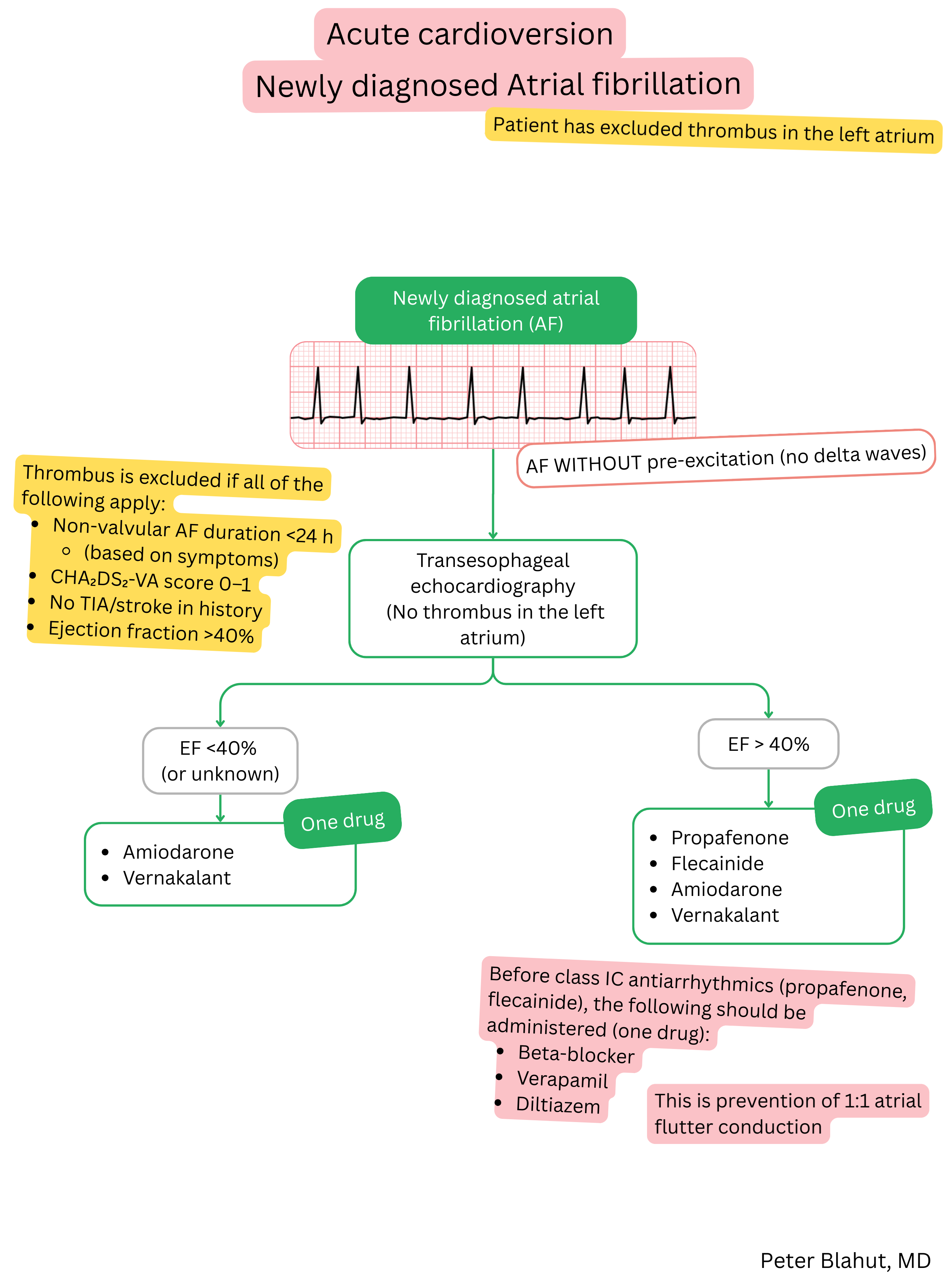


Guideline algorithm for acute cardioversion in newly diagnosed atrial fibrillation without pre-excitation with antiarrhythmic selection based on left ventricular ejection fraction.


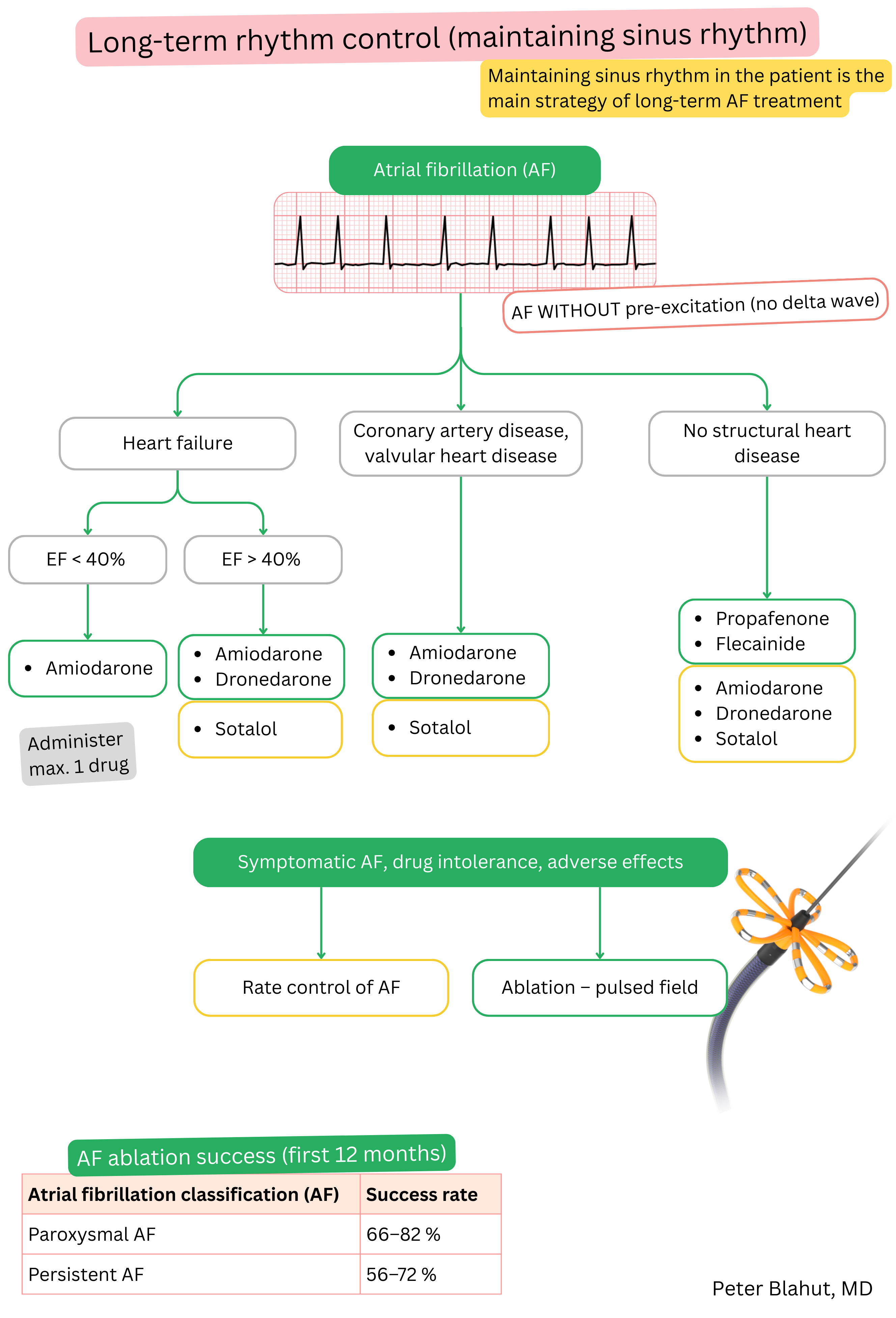
Guideline algorithm for long-term rhythm control in atrial fibrillation with antiarrhythmic selection based on structural heart disease and left ventricular function including catheter ablation indication.

These guidelines are unofficial and do not represent formal guidelines issued by any professional cardiology society. They are intended for educational and informational purposes only.

Peter Blahut, MD

Peter Blahut, MD (Twitter(X), LinkedIn, PubMed)