Electrophysiology CINRE, hospital BORY

Alcohol


A standard drink contains 10–14 g of alcohol. A standard drink is defined as:

  • 0.3 L of beer, or
  • 1 dL of wine, or
  • 40 mL of vodka (or another 40% alcoholic beverage).

Excessive chronic alcohol consumption

  • causes liver disease and may progressively lead to liver cirrhosis, resulting in a hypocoagulable state.
    • Liver disease may develop within 5–10 years if the patient consumes 2 alcoholic drinks daily.
    • Subsequently, liver cirrhosis may develop over the following years.
  • Portal hypertension and oesophageal varices may develop, which can rupture and bleed.
  • Most patients with atrial fibrillation (AF) require anticoagulation therapy according to the CHA2DS2-VA score,
    • and due to the hypocoagulable state and oesophageal varices, they are at increased risk of bleeding.
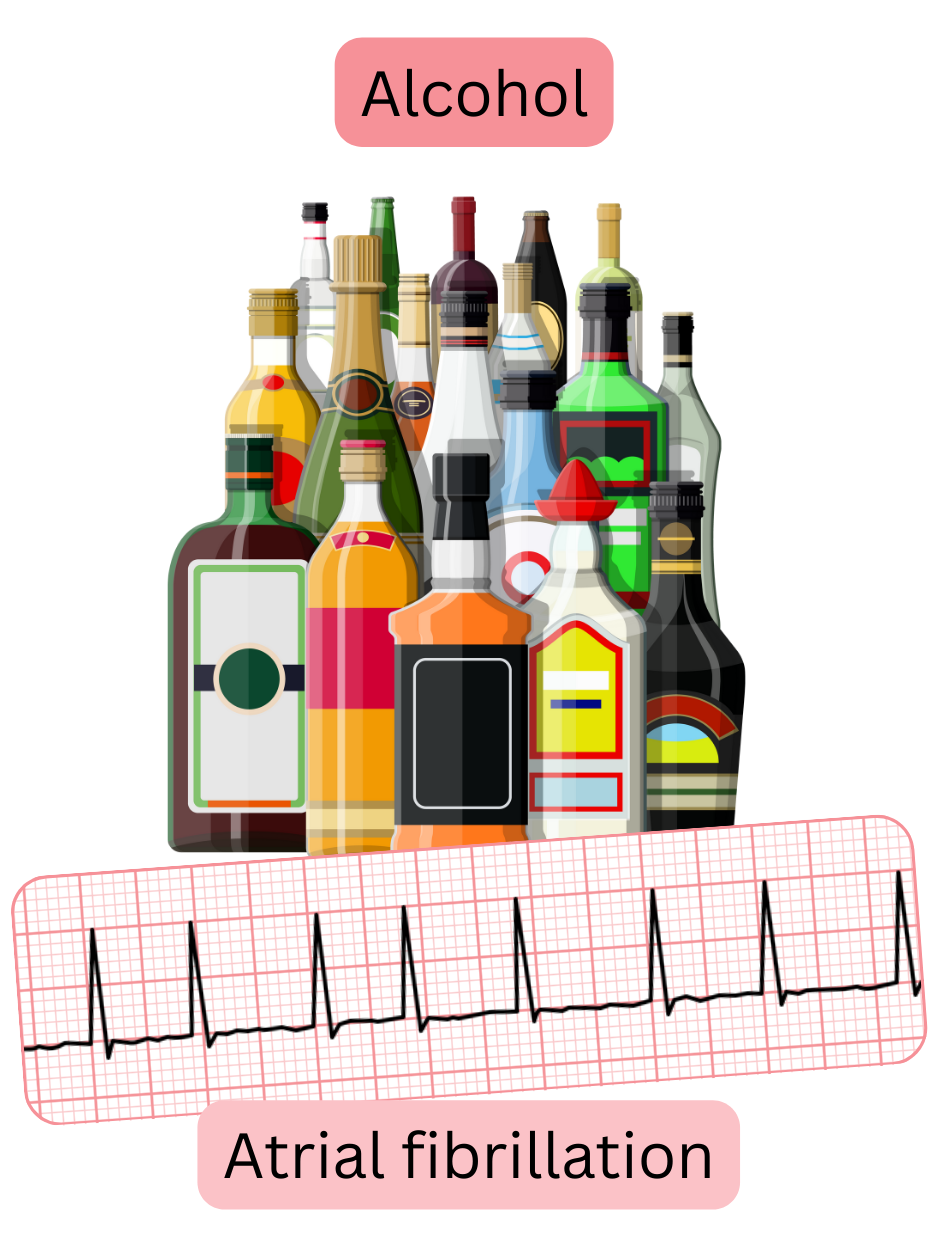
Illustration depicting excessive alcohol consumption as a significant risk factor for atrial fibrillation with an ECG recording of the arrhythmia.
Alcohol
Definition
  • A standard drink contains 10–14 g of alcohol. A standard drink is defined as:
    • 0.3 L of beer, or
    • 1 dL of wine, or
    • 40 mL of vodka (or another 40% alcoholic beverage).
Symptoms (of excessive alcohol use)
  • Mood disorders
  • Depression
  • Anxiety
  • Weakness
  • Subicterus (yellow sclerae)
  • Tremor
Diagnosis
  • Targeted question regarding the number of standard drinks consumed per week
  • The following laboratory parameters are elevated:
    • CDT – carbohydrate-deficient transferrin (normalizes after 3 weeks of abstinence)
      • the most specific marker of chronic alcohol consumption
    • GGT – liver enzyme (normalizes after 5 weeks of abstinence)
    • AST – liver enzyme (normalizes after 4 weeks of abstinence)

An alcohol binge (>3 standard drinks within 4 hours)

  • Triggers an episode of AF in 20–30% of patients with paroxysmal or persistent AF who are currently in sinus rhythm.

If even one standard drink triggers an AF episode in a given patient, alcohol abstinence is recommended.

A larger alcohol binge (>6 standard drinks within 4 hours)

  • Triggers an AF episode in 15–30% of patients without chronic AF.
  • However, this figure may be underestimated because these patients may have asymptomatic paroxysms of AF that are not documented,
  • and 100% documentation of asymptomatic AF would require an implanted loop recorder, which is not routinely performed.
Alcohol and Atrial Fibrillation Class
The maximum alcohol intake over 7 days is up to 3 standard drinks. A standard drink is defined as:
  • 0.3 L of beer, or
  • 1 dL of wine, or
  • 40 mL of vodka (or another 40% alcoholic beverage).
I
Alcohol is not recommended if even small amounts (1 standard drink) act as a trigger for atrial fibrillation episodes. III
Binge drinking (alcohol excess) is not recommended. III

These guidelines are unofficial and do not represent formal guidelines issued by any professional cardiology society. They are intended for educational and informational purposes only.

Peter Blahut, MD

Peter Blahut, MD (Twitter(X), LinkedIn, PubMed)