
Rhythm control (maintenance of sinus rhythm) is a fundamental treatment strategy in atrial fibrillation (AF).
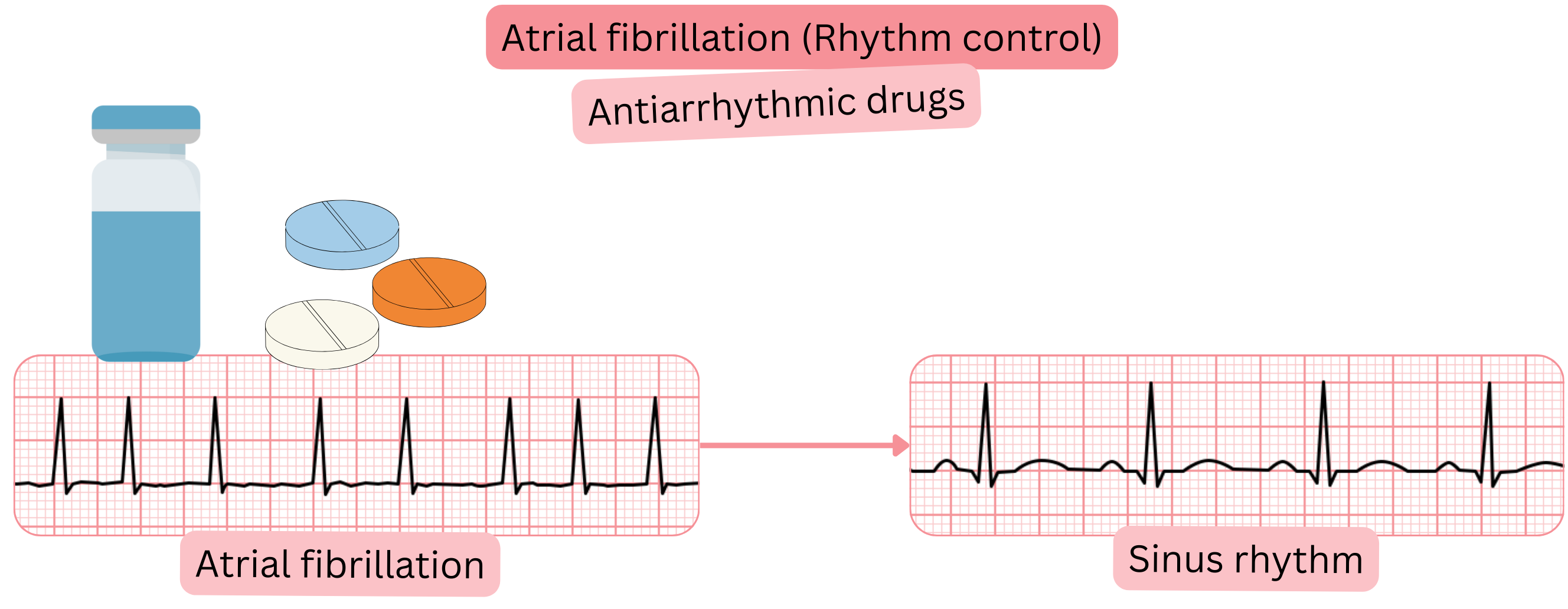
The rhythm control strategy in AF includes:
If a patient is diagnosed with AF, anticoagulation therapy is indicated according to the CHA2DS2-VA score
| Rhythm control of atrial fibrillation – Long-term therapy | Class |
|---|---|
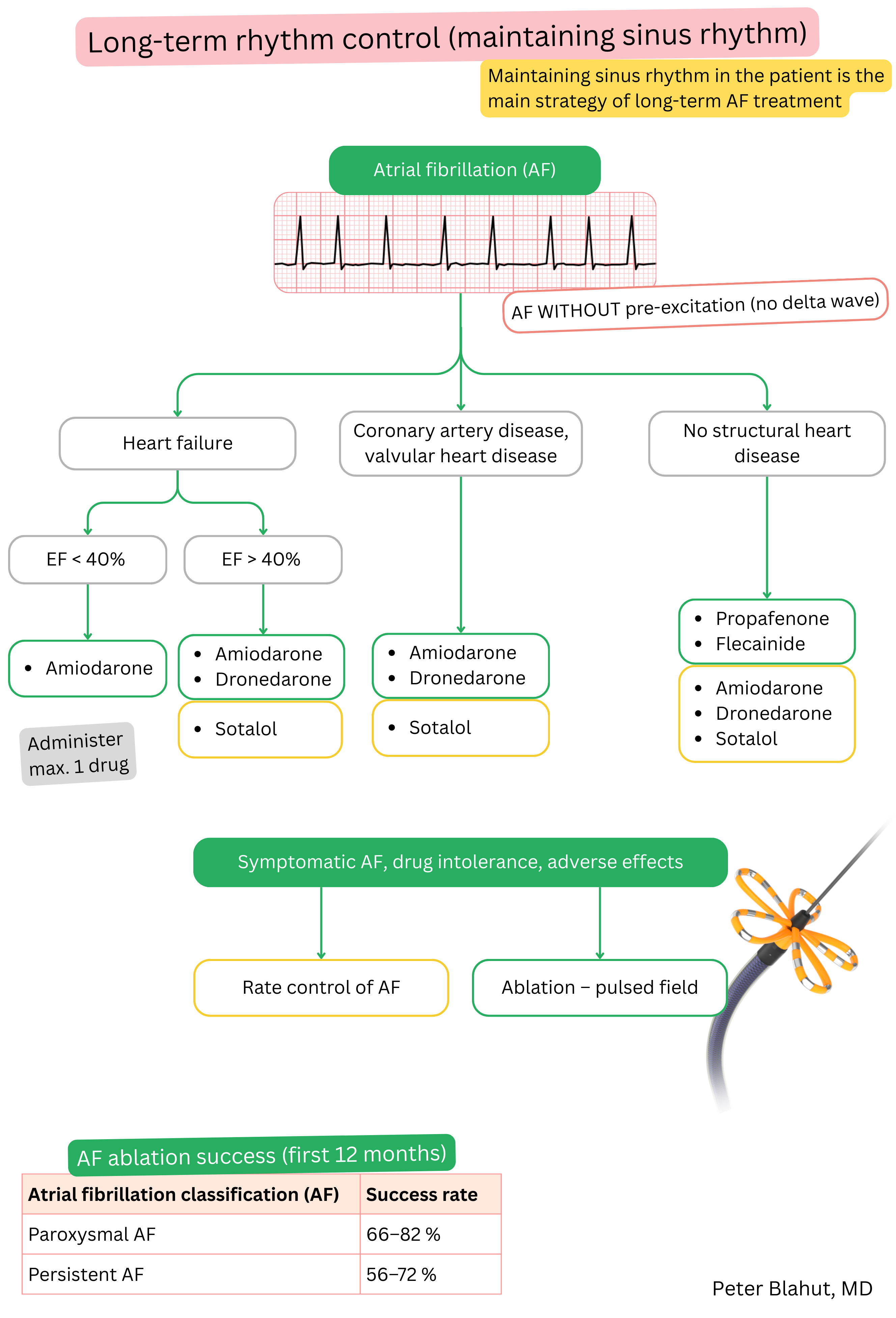
| Amiodarone is recommended for long-term maintenance of sinus rhythm in patients with EF <40 % or structural heart disease. | I |
| Amiodarone is among the most effective antiarrhythmic drugs; however, it has a high incidence of adverse effects and therefore should not be used long term (>12 months). | IIb |
| Dronedarone is recommended for long-term maintenance of sinus rhythm in patients with EF >40 %, including those with structural heart disease. | I |
| Flecainide or propafenone are recommended for long-term maintenance of sinus rhythm in patients without structural heart disease. | I |
| During treatment with flecainide or propafenone, concomitant administration of AV nodal–blocking drugs (beta-blockers, verapamil, or diltiazem) should be considered to prevent 1:1 atrial flutter conduction. | IIa |
These guidelines are unofficial and do not represent formal guidelines issued by any professional cardiology society. They are intended for educational and informational purposes only.