
Electrophysiology CINRE, hospital BORY
Atrial Fibrillation: Guidelines (2026) Compendium / 14.3 Pace and Ablate Treatment of Atrial Fibrillation

Pace and Ablate Treatment of Atrial Fibrillation


Pace and ablate treatment of atrial fibrillation (AF) is:

  • Implantation of a permanent pacemaker followed by catheter ablation of the AV node.
  • The goal is to ensure complete ventricular rate control in patients with refractory, symptomatic AF.

Refractory AF is a condition,
when symptoms persist and/or ventricular rate is inadequate (>100/min) and the following conditions have been met:
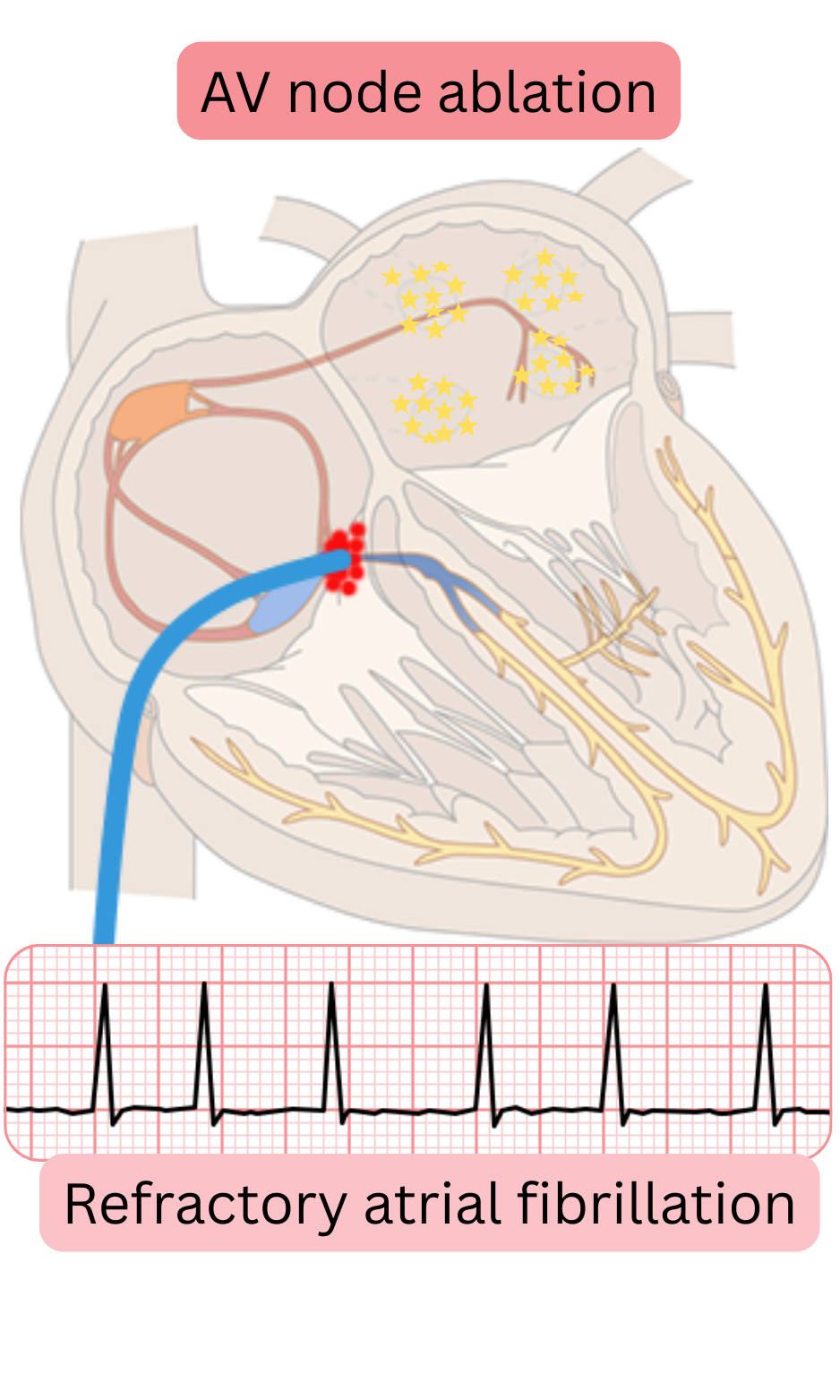
  • Reversible causes of AF have been excluded (hypertension, thyrotoxicosis, obesity, alcohol, stress, etc.).
  • Pharmacological AF therapy has failed (≥1 class I or III anti-arrhythmic drug and rate-control drugs).
  • Catheter AF ablation has been unsuccessful (≥2 attempts of pulsed field ablation).
  • AF symptoms persist.
Diagram of atrioventricular node ablation in refractory atrial fibrillation illustrating interruption of AV conduction with subsequent ventricular rate control by permanent pacing.
Refractory atrial fibrillation
Definition Persistent symptoms and/or inadequate ventricular rate > 100/min
Reversible causes Excluded (hypertension, thyrotoxicosis, obesity, alcohol, stress, etc.)
Pharmacological therapy Failure (≥ 1 class I or III anti-arrhythmic drug and rate-control drugs)
Catheter ablation Unsuccessful ablation (≥ 2 attempts of pulsed field ablation)
Symptoms Persist

The pace and ablate strategy is the last treatment option for refractory AF.

The indication for the “pace and ablate” strategy is refractory AF.

The goal of the “Pace and Ablate” strategy is to:

  • Achieve a regular ventricular rate via a pacemaker.
  • Eliminate symptoms caused by a rapid or uncontrolled ventricular response.
  • Prevent or reverse tachycardiomyopathy.
  • Improve cardiac function and quality of life.

In asymptomatic persistent AF, rate control may be chosen after discussion with the patient.
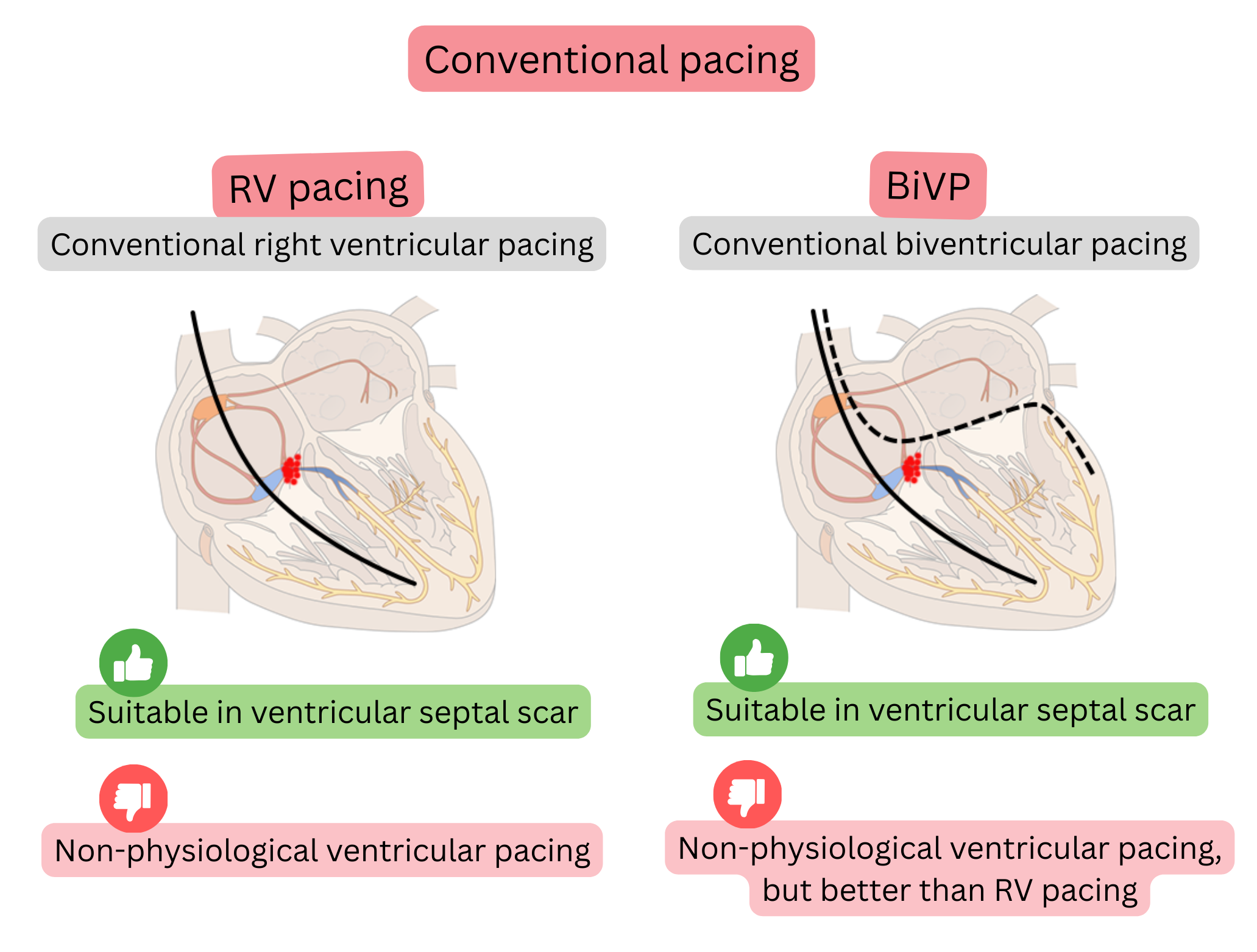
  • AF is then reclassified as permanent AF.
Diagram of conventional pacing comparing right ventricular pacing and biventricular pacing with their effects on ventricular activation synchrony and physiological conduction.

After pacemaker implantation, the goal is to achieve ventricular synchrony and avoid pacing-induced cardiomyopathy. Ventricular pacing modalities include:

  • RV pacing
  • CRT (cardiac resynchronisation therapy) – biventricular pacing (BiVP)
  • Conduction system pacing
    • His bundle pacing (HBP)
    • HOT-CRT (His-Optimized CRT) = HBP + LV pacing
      • is optimized His bundle pacing with a lead in the coronary sinus
    • Left bundle branch area pacing (LBBAP)
    • LOT-CRT (Left bundle branch area Optimized CRT) = LBBAP + LV pacing
      • is optimized LBBAP with a lead in the coronary sinus

In the “Pace and Ablate” strategy for AF, conduction system pacing (HBP or LBBAP) is preferred.
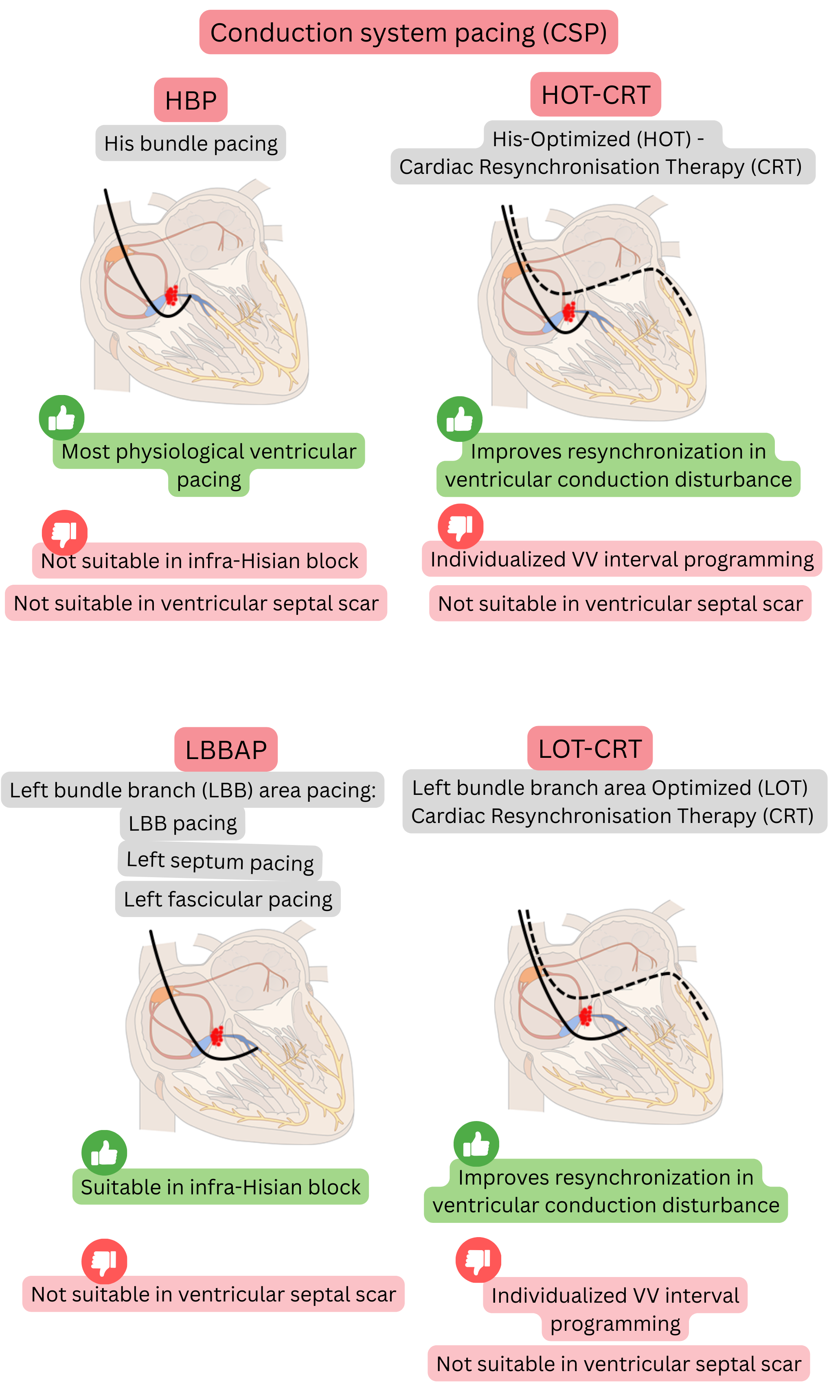
Diagram of conduction system pacing comparing His bundle pacing, left bundle branch area pacing, and their combinations with CRT, focusing on physiological ventricular activation and effective resynchronization.
Pace and Ablate strategy for atrial fibrillation treatment Class
The Pace and Ablate strategy for AF may be considered if AF is symptomatic and the following have failed:
  • pharmacological therapy and
  • ≥2 ablations (pulsed field).
IIa

These guidelines are unofficial and do not represent formal guidelines issued by any professional cardiology society. They are intended for educational and informational purposes only.

Peter Blahut, MD

Peter Blahut, MD (Twitter(X), LinkedIn, PubMed)