
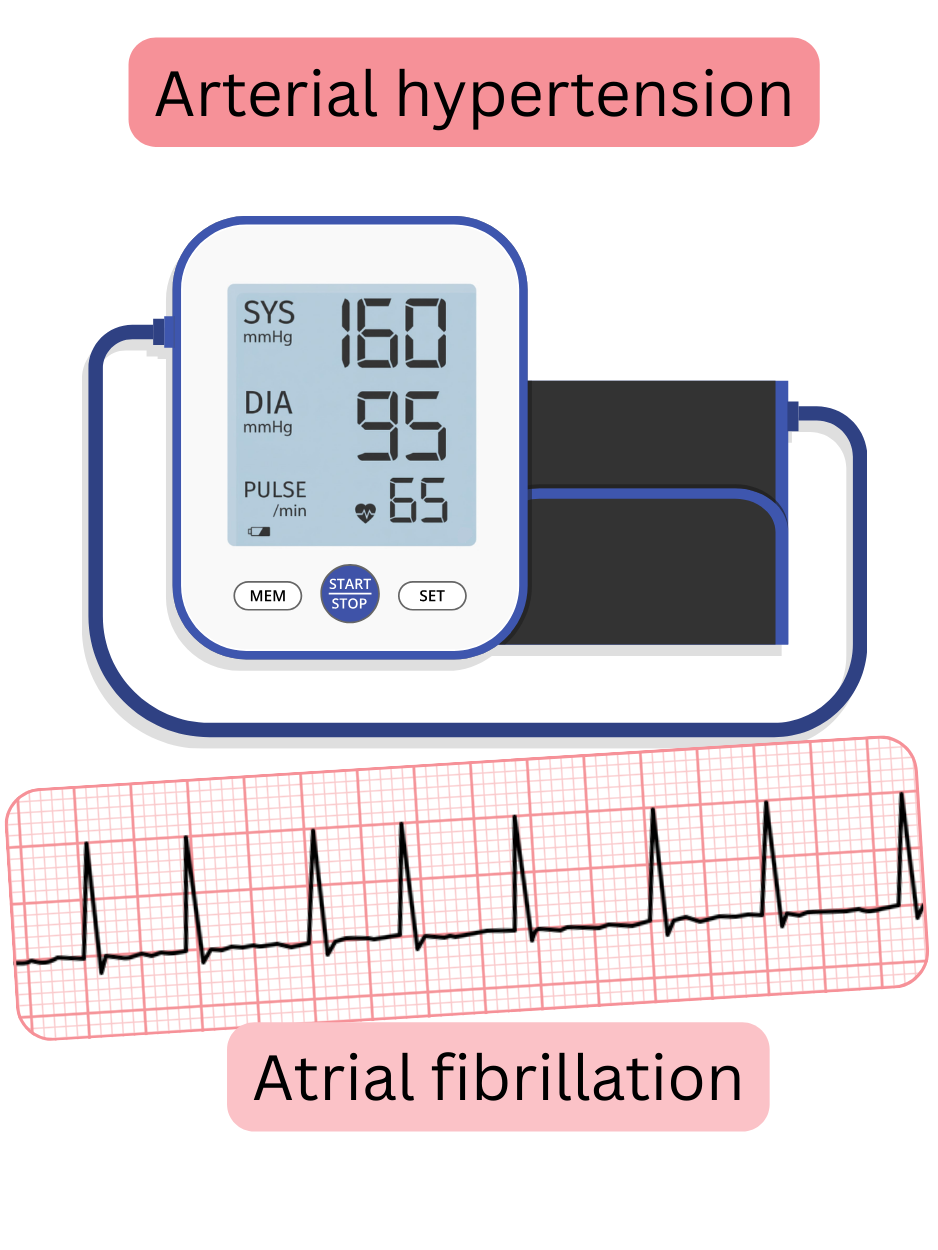
Arterial hypertension (AH) is defined as repeatedly measured blood pressure >140/90 mmHg.
Uncontrolled arterial hypertension (AH) increases the incidence and worsens the clinical course of atrial fibrillation (AF).
In AH, left ventricular hypertrophy and impaired relaxation develop, resulting in diastolic dysfunction. Subsequently, left atrial pressure increases, leading to left atrial dilatation and fibrosis. Atrial remodelling occurs. AH creates a substrate for AF and worsens AF through three main mechanisms:
Uncontrolled AH, regardless of the presence of AF, increases the risk of:
| Arterial Hypertension | |
|---|---|
Definition
| |
Symptoms
| |
Diagnosis
| |
The treatment strategy for AH is a target blood pressure of 120–129/70–79 mmHg,
Elderly patients (>70 years) may benefit from a higher systolic blood pressure of 130–150 mmHg in order to:
ACE inhibitors and angiotensin receptor blockers are among the antihypertensive agents that most effectively reduce the incidence and improve the course of AF.
Each reduction of systolic blood pressure by 5 mmHg reduces the risk of a cardiovascular event by 9%. Cardiovascular events include:
| Arterial Hypertension and Atrial Fibrillation | Class |
|---|---|
| Adequate treatment of arterial hypertension (<140/90 mmHg) reduces the incidence and improves the clinical course of AF and reduces the risk of cardiovascular events. | I |
| The treatment strategy for arterial hypertension is a target blood pressure of 120–129/70–79 mmHg, regardless of the combination of antihypertensive agents used to achieve this target. | I |
| ACE inhibitors and angiotensin receptor blockers are the preferred antihypertensive agents in patients with atrial fibrillation. | IIa |
These guidelines are unofficial and do not represent formal guidelines issued by any professional cardiology society. They are intended for educational and informational purposes only.