Electrophysiology CINRE, hospital BORY
Atrial Fibrillation: Guidelines (2026) Compendium / 11.5 Rate Control of Atrial Fibrillation – Antiarrhythmic Drugs

Rate Control of Atrial Fibrillation – Antiarrhythmic Drugs


Rate control (control of the ventricular response) is a secondary treatment strategy in atrial fibrillation (AF).

  • The primary and fundamental treatment of AF is rhythm control.
    • Rate control in AF is indicated if rhythm control fails.
  • The rate control strategy in AF is aimed at regulating the ventricular response (the patient remains in AF).
  • The goal is to achieve an adequate resting and exercise ventricular response, improve symptoms, and enhance quality of life.
Rate control scheme in atrial fibrillation using pharmacological therapy illustrating reduction of ventricular rate from 150 bpm to 70 bpm.

The target ventricular rate (QRS) during long-term rate control of AF should be:

  • <100/min during usual physical activity (e.g. walking, household activities).
  • <80/min at rest (e.g. watching television, lying down, working on a computer).

The rate control strategy in AF includes:

  • Elimination and management of risk factors and comorbidities.
  • Pharmacological therapy to slow AV conduction.
  • Pace-and-ablate – pacemaker implantation and AV node ablation in patients with failure of pharmacological therapy.

If a patient is diagnosed with AF, anticoagulation therapy is indicated according to the CHA2DS2-VA score

  • regardless of the chosen AF treatment strategy (rhythm control or rate control).
  • regardless of the long-term AF rate.
Rate control of atrial fibrillation Class
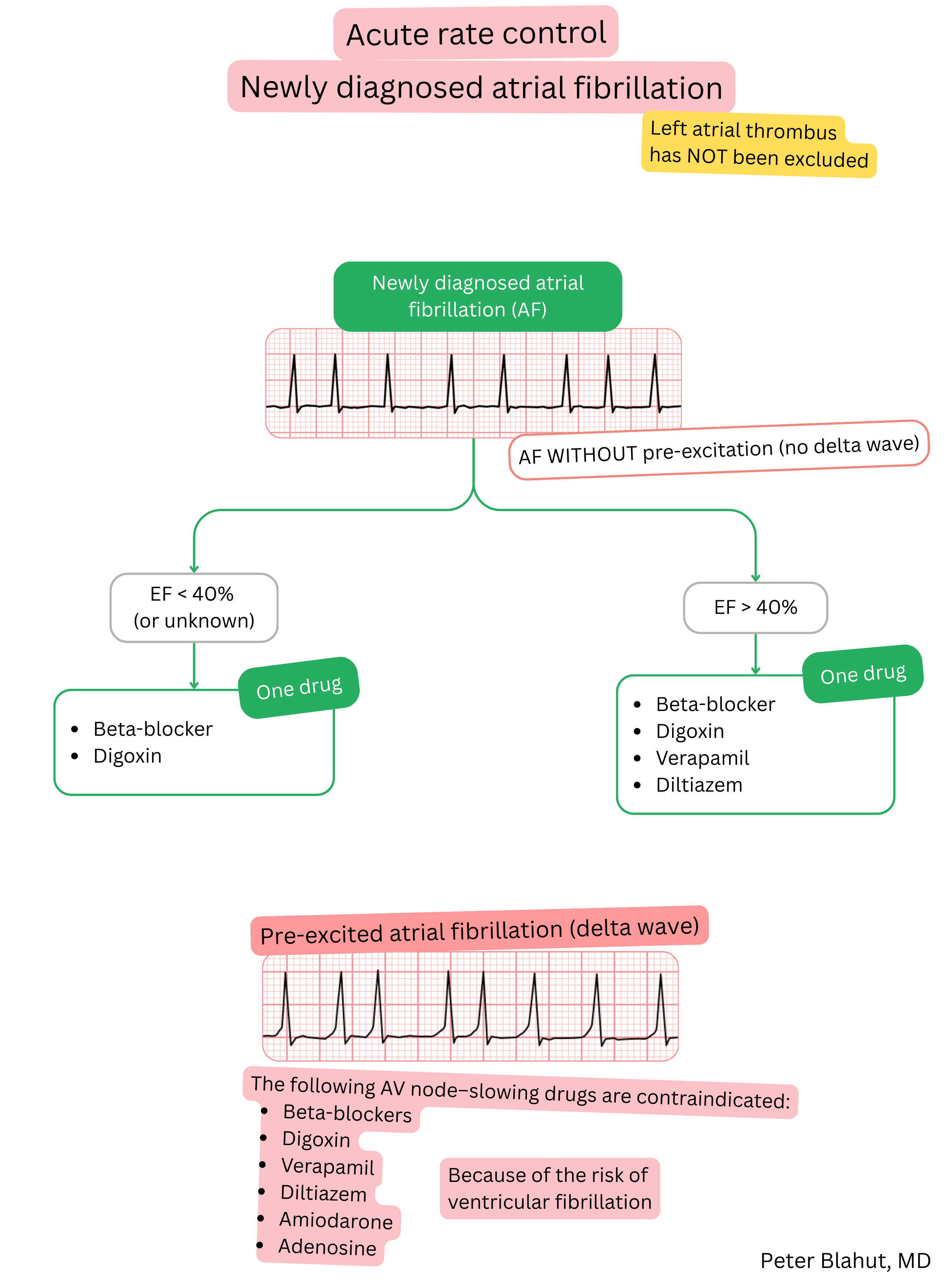
Acute rate control in AF is recommended in every haemodynamically stable patient with newly diagnosed AF in whom left atrial thrombus has not been excluded. I
In pre-excited AF, drugs that slow AV nodal conduction are contraindicated:
  • Beta-blockers
  • Digoxin
  • Verapamil
  • Diltiazem
  • Amiodarone
  • Adenosine
III
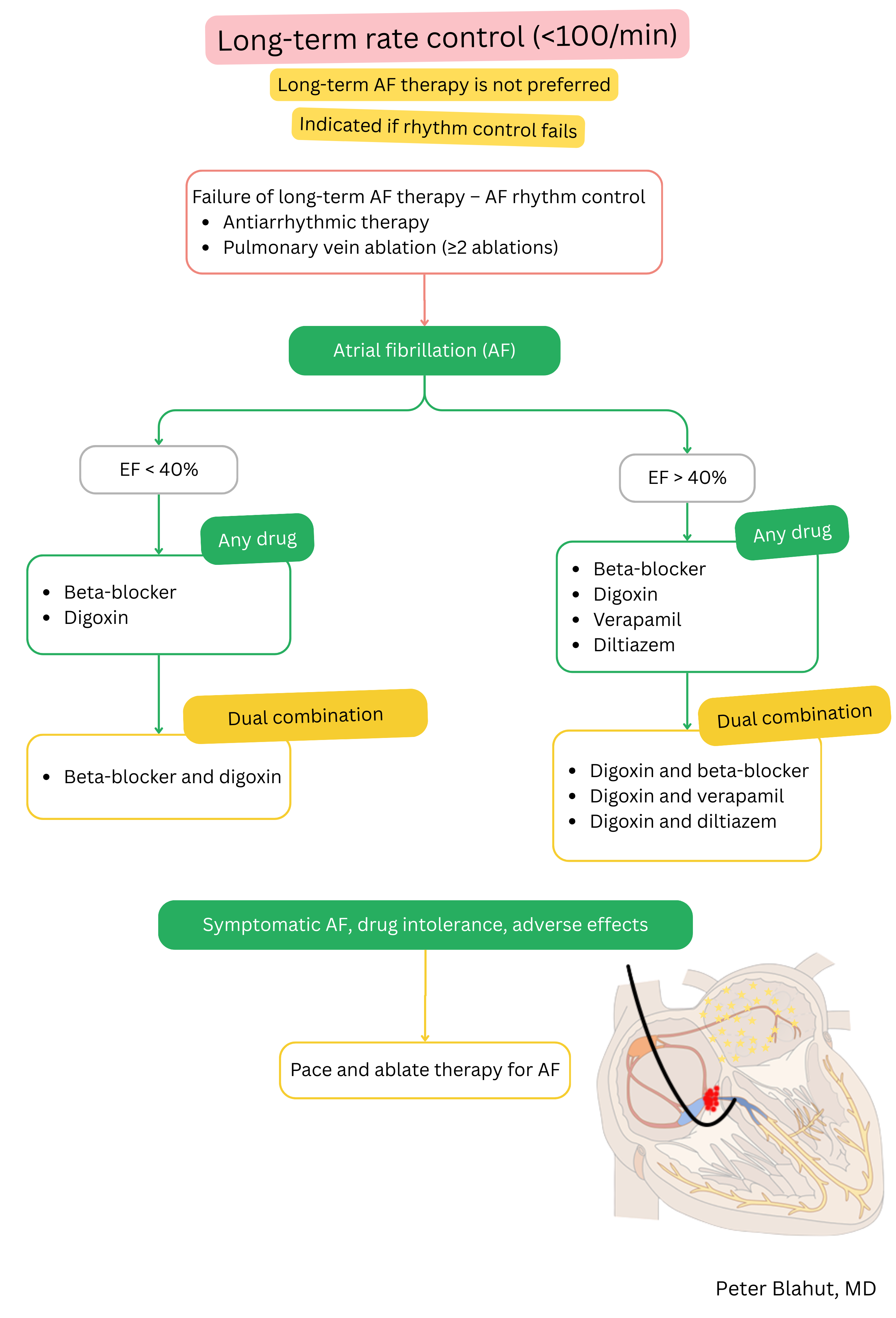
For rate control (acute or chronic) in a patient with AF and EF <40% the following are recommended:
  • Beta-blocker
  • Digoxin
I
For rate control (acute or chronic) in a patient with AF and EF >40% the following are recommended:
  • Beta-blocker
  • Digoxin
  • Diltiazem
  • Verapamil
I
Combination therapy for rate control should be considered if the effect of a single drug is inadequate. IIa
The target rate during long-term rate control of AF should be:
  • <100/min during usual activity (walking, cooking)
  • <80/min at rest (watching TV, lying down, working on a computer)
IIa
Pace-and-ablate strategy (AV node ablation + pacemaker) should be considered if AF is symptomatic and there has been failure of:
  • pharmacological therapy and
  • ≥2 pulsed-field ablations.
IIa


Guideline algorithm for acute rate control in newly diagnosed atrial fibrillation with treatment selection based on ejection fraction and contraindication to AV nodal blockers in pre-excitation.


Guideline algorithm for long-term rate control in atrial fibrillation with pharmacotherapy selection based on left ventricular ejection fraction and indication for pace-and-ablate strategy.

These guidelines are unofficial and do not represent formal guidelines issued by any professional cardiology society. They are intended for educational and informational purposes only.

Peter Blahut, MD

Peter Blahut, MD (Twitter(X), LinkedIn, PubMed)