
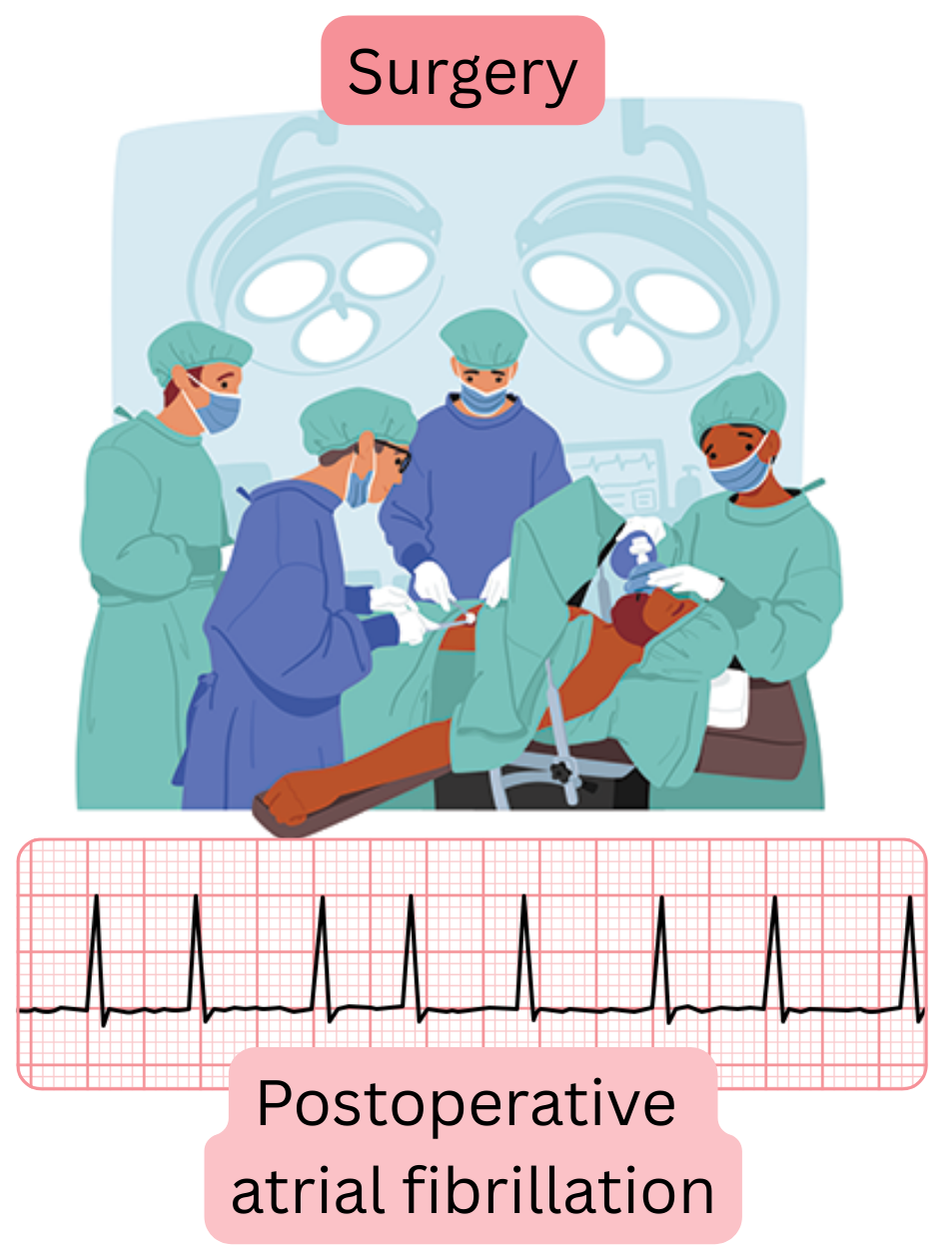
Postoperative atrial fibrillation (AF) is new-onset AF occurring within 48 hours after surgery.
The risk of postoperative AF is:
As prevention of postoperative AF, discontinuation of beta-blockers before surgery is not recommended.
As prevention of postoperative AF, preoperative administration of a beta-blocker or amiodarone may be considered.
| Prevention of postoperative atrial fibrillation | ||
|---|---|---|
| Timing | Drug and dose | Postoperative treatment |
| 1 day before surgery | Metoprolol tartrate 25 – 50 mg oral twice daily |
Continue for 5 days |
| 1 – 6 hours before surgery | Amiodarone 300 mg intravenous |
200 mg oral three times daily for 5 days, then 200 mg oral once daily for 5 days, then discontinue treatment |
Amiodarone is not administered routinely for prevention of cardiac surgery postoperative AF,
| Increased risk of postoperative cardiac surgery atrial fibrillation |
|---|
| Age >65–70 years |
| Enlarged left atrium (>40 mm, or LAVI >34 ml/m2) |
| Pre-existing atrial fibrillation |
| Left ventricular dysfunction (EF <50%) |
| Previous cardiac surgery |
Complex or prolonged cardiac surgery
|
LAVI – left atrial volume index. EF – ejection fraction. CABG – coronary artery bypass grafting. AVR – aortic valve replacement. MVR – mitral valve replacement. ECC – extracorporeal circulation (cardiopulmonary bypass).
Long-term anticoagulation therapy after cardiac surgery postoperative AF is uncertain:
As prevention of cardiac surgery postoperative AF, left posterior pericardiotomy is recommended.
Left posterior pericardiotomy:
| Postoperative atrial fibrillation | Class |
|---|---|
| Amiodarone is recommended for prevention of cardiac surgery postoperative AF in patients at increased risk of postoperative cardiac surgery AF. | I |
| Posterior pericardiotomy should be considered as prevention of cardiac surgery postoperative AF. | IIa |
| Anticoagulation therapy should be considered in new-onset postoperative AF according to CHA2DS2-VA score. | IIa |
| Preoperative administration of beta-blockers for prevention of postoperative AF (non-cardiac) is not recommended. | III |
If a patient develops postoperative AF after cardiac surgery (without premedication with amiodarone),
These guidelines are unofficial and do not represent formal guidelines issued by any professional cardiology society. They are intended for educational and informational purposes only.