Electrophysiology CINRE, hospital BORY

Verapamil


Classification:

  • Class IV – Non-dihydropyridine calcium (Ca²⁺) channel blockers
    • Verapamil – slows conduction through the AV node (more strongly)
    • Diltiazem – slows conduction through the AV node (more weakly)
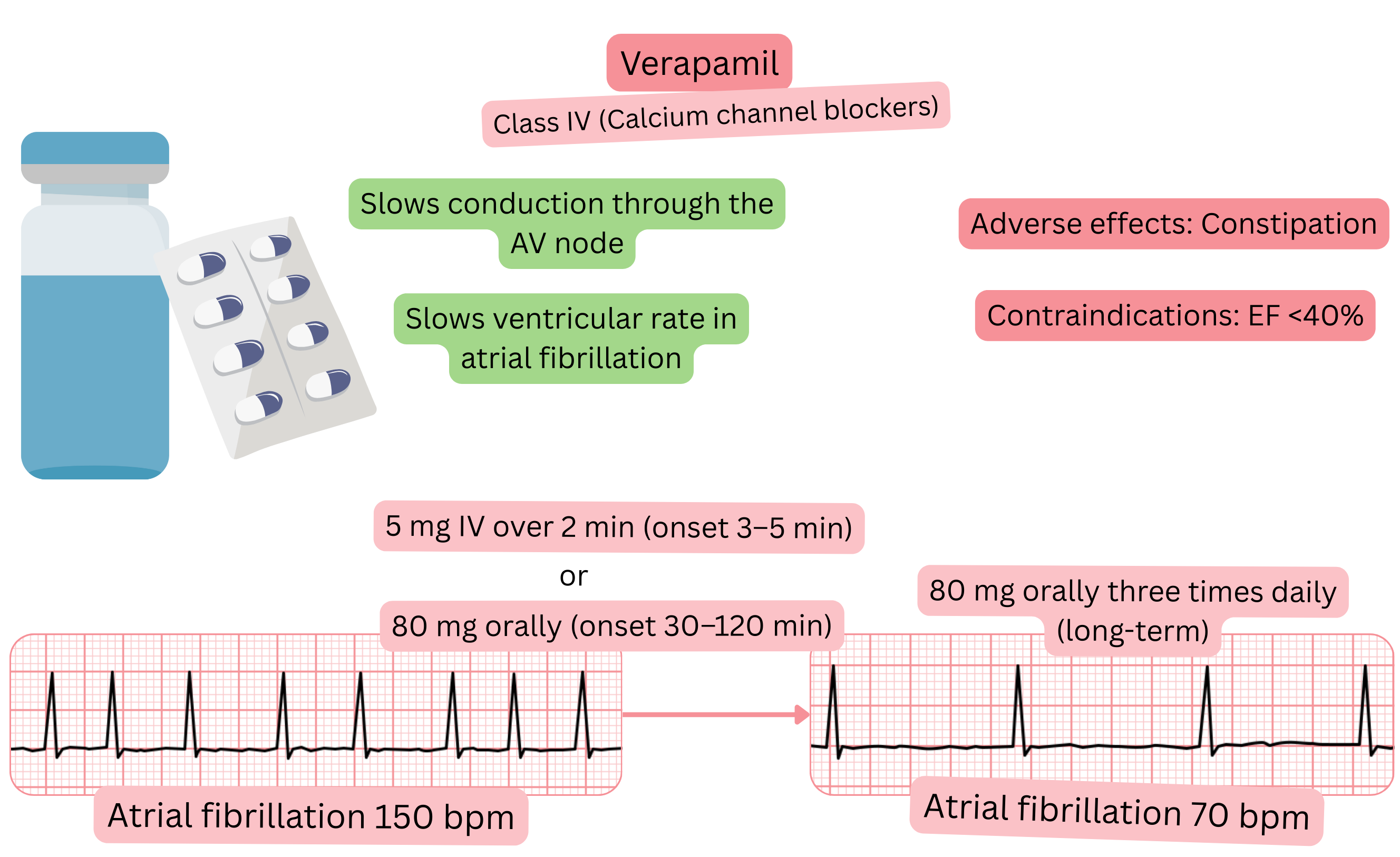
Diagram of the effect of verapamil as a class IV antiarrhythmic illustrating slowed conduction through the atrioventricular node and reduced ventricular response during atrial fibrillation.

Mechanism:

  • Slows the AV node – prolongs AV nodal conduction and its effective refractory period (ERP)
    • It also minimally slows the SA node
  • Negative inotropic effect – inhibits calcium channels in the myocardium
  • Lowers blood pressure – inhibits calcium channels in vascular smooth muscle

Effect on AF:

  • Slows ventricular response during an episode of atrial fibrillation (AF) because it inhibits the AV node
Verapamil and atrial fibrillation (AF)
Brand names
Isoptin, Isoptine, Veragamma, Vera-Lich, Veramex, Veranorm, Verapabene, Verapam
Indications
  • Acute control of ventricular response during AF
  • Chronic control of ventricular response during AF
Dosing
  • Acute rate control in AF (intravenous)
    • 5–10 mg (intravenous) over 2 minutes
    • A second dose of 5–10 mg (intravenous) may be administered after 30 minutes if adequate rate slowing is not achieved
  • Chronic rate control in AF (oral)
    • 40–120 mg three times daily – immediate-release
    • 180–480 mg once daily – prolonged-release
Onset of action
  • 3–5 min. (intravenous)
  • 30–120 min. (oral)
Effect
  • Reduces AF rate by 10–30 %
  • Reduces systolic blood pressure by 5–10 %
Duration of action
  • 1–6 h (intravenous)
  • 6–8 h (oral) – immediate-release
  • 12–24 h (oral) – prolonged-release
Contraindications
  • Pre-excited AF (delta wave on ECG)
  • AV block II or III degree
  • Bradycardia (< 50/min.)
  • Hypotension (< 90 mmHg)
  • Concomitant intravenous beta-blocker administration
  • Ejection fraction < 40 %
  • Sick sinus syndrome (without pacemaker)
  • Cardiogenic shock
  • Pregnancy, breastfeeding
  • Allergy to verapamil

Patient monitoring after initiation of verapamil:

  • Discontinue if contraindications occur
  • Discontinue or reduce the dose if adverse effects occur
Patient monitoring after initiation of verapamil
Time since initiation What to monitor Reason for treatment interruption
Week 1 ECG
Blood pressure
AV block II or III degree
Bradycardia < 50/min.
Hypotension < 100/60 mmHg
6–12 months Echocardiography Ejection fraction < 40 %

Adverse effects

  • Very common (> 10 %)
    • Constipation (10–20 %)
  • Common (1–10 %)
    • Dizziness
    • Headache
    • Hypotension
    • Bradycardia
    • Peripheral oedema
    • Nausea
    • Fatigue
    • Flushing
    • AV block I
  • Uncommon (< 1 %)
    • AV block II
    • Elevation of hepatic enzymes
    • Syncope
    • Rash
  • Rare (< 0.1 %)
    • Asystole
    • AV block III
    • Gingival hypertrophy
    • Hyperprolactinaemia

Verapamil and diltiazem belong to Class IV anti-arrhythmic drugs, but they are different molecules,

  • which bind differently to calcium channels.
  • Therefore, their properties differ in part.
Verapamil vs. diltiazem in atrial fibrillation (AF)
Characteristic Verapamil Diltiazem
Effect on AV node Stronger (slows AF more) Weaker (slows AF less)
Negative inotropy More pronounced (caution if EF<50%) Milder (better tolerability)
Peripheral vasodilation Weaker (lower risk of hypotension) Stronger (higher risk of hypotension)
Typical adverse effects Constipation, bradycardia, AV block Ankle oedema, hypotension


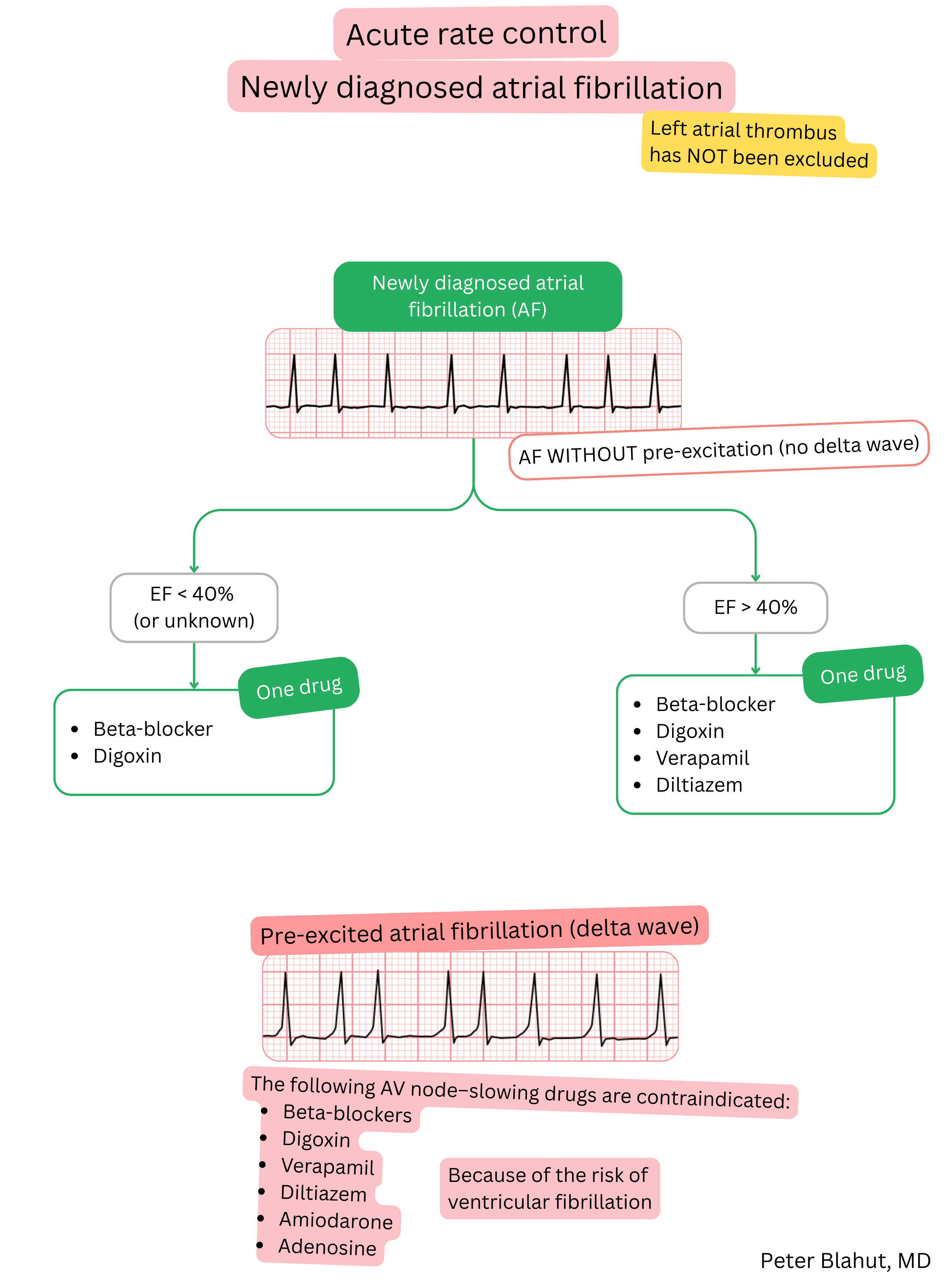
Guideline algorithm for acute rate control in newly diagnosed atrial fibrillation with treatment selection based on ejection fraction and contraindication to AV nodal blockers in pre-excitation.


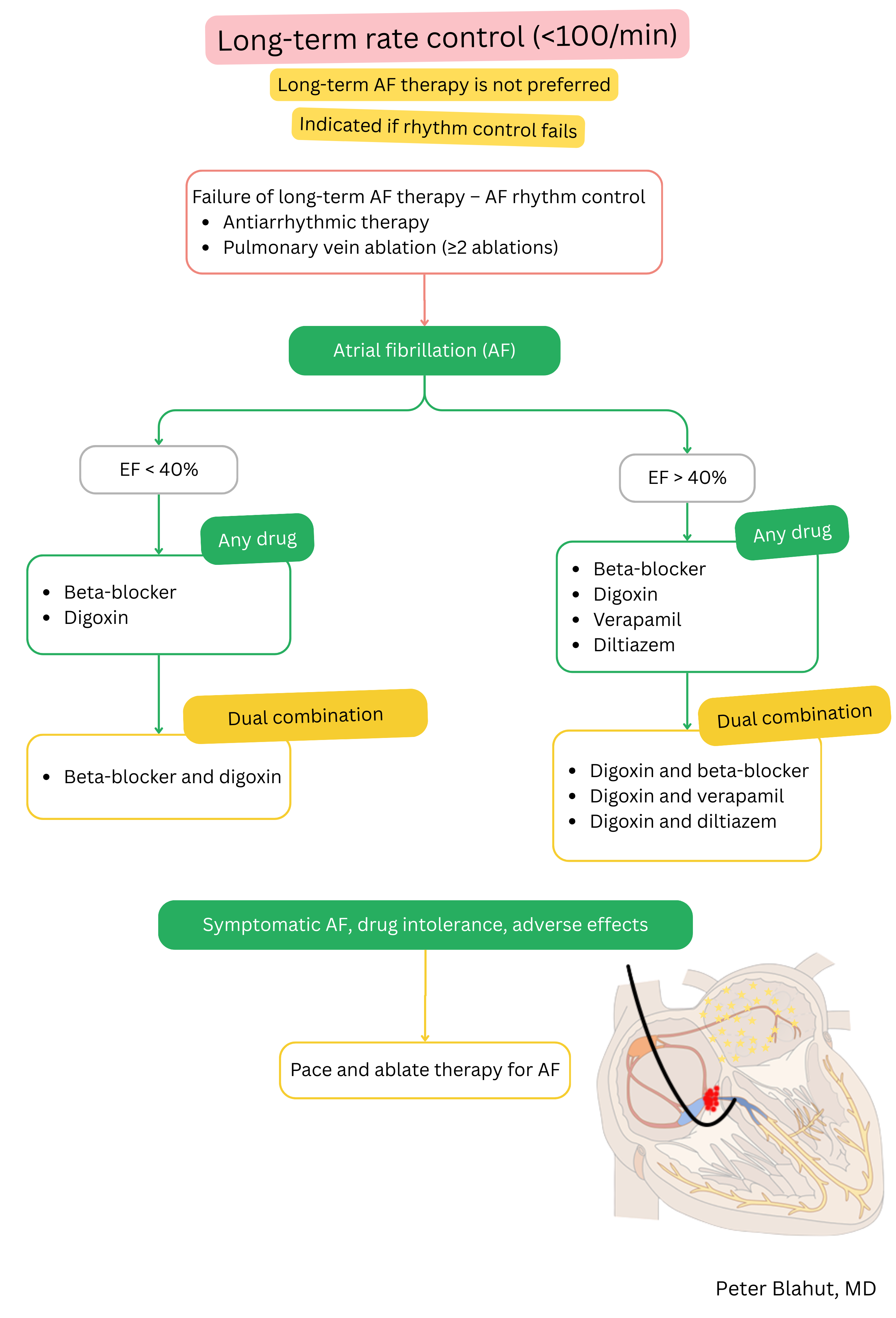
Guideline algorithm for long-term rate control in atrial fibrillation with pharmacotherapy selection based on left ventricular ejection fraction and indication for pace-and-ablate strategy.

These guidelines are unofficial and do not represent formal guidelines issued by any professional cardiology society. They are intended for educational and informational purposes only.

Peter Blahut, MD

Peter Blahut, MD (Twitter(X), LinkedIn, PubMed)