
Electrophysiology CINRE, hospital BORY

Sleep Apnoea Syndrome


Sleep apnoea syndrome (SAS) is a sleep disorder characterized by

  • recurrent episodes of upper airway obstruction during sleep, resulting in apnoeic pauses.
  • This leads to impaired oxygenation of the blood in the lungs.
  • During apnoeic pauses, hypoxia of the organs, myocardium, and atria occurs.
  • Atrial fibrosis develops, leading to atrial remodelling.
    • This creates a substrate for atrial fibrillation (AF).

The prevalence of SAS is 5–15% and it occurs three times more frequently in men than in women.

Prevalence correlates with BMI; each 5 kg/m² increase in BMI triples the risk of SAS.
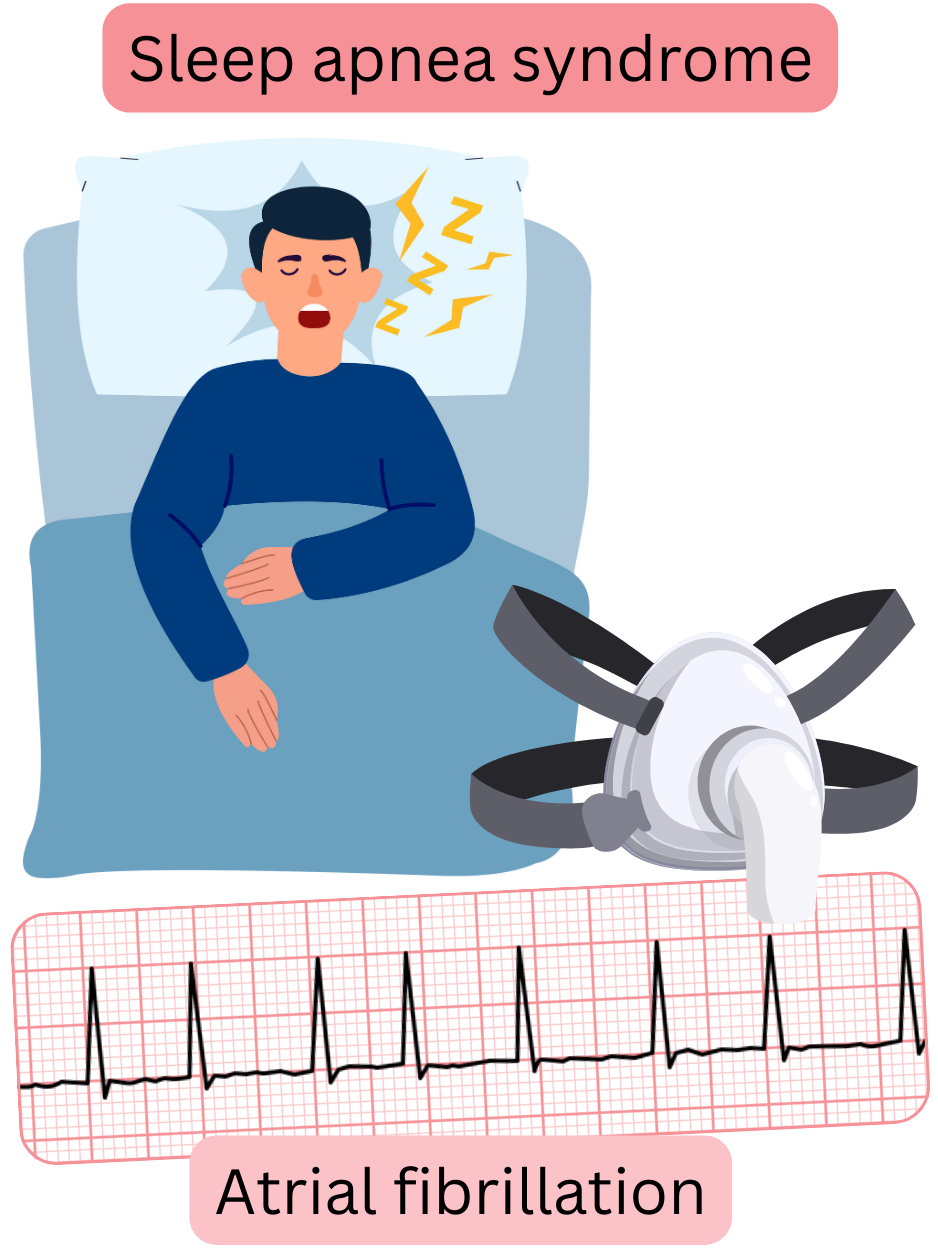
Illustration depicting sleep apnea syndrome as a significant risk factor for atrial fibrillation with an ECG recording of the arrhythmia.
Sleep Apnoea Syndrome
Definition
  • Sleep apnoea syndrome (SAS) is a sleep disorder characterized by recurrent episodes of upper airway obstruction during sleep, resulting in apnoeic pauses.
Symptoms
  • During sleep:
    • Snoring
    • Interrupted breathing
    • Restless sleep
    • Nocturnal choking
    • Excessive night sweating
  • During the day:
    • Sleepiness
    • Impaired concentration
    • Irritability
Diagnosis
  • SAS is diagnosed in sleep laboratories.
  • Or by using smart devices with this function (Apple Watch).

Treatment of SAS is provided using a mask that delivers continuous positive pressure to the upper airways; the device is referred to as CPAP (Continuous Positive Airway Pressure).

Sleep Apnoea Syndrome and Atrial Fibrillation Class
Adequate treatment of sleep apnoea syndrome reduces the incidence and improves the clinical course of atrial fibrillation. IIb

These guidelines are unofficial and do not represent formal guidelines issued by any professional cardiology society. They are intended for educational and informational purposes only.

Peter Blahut, MD

Peter Blahut, MD (Twitter(X), LinkedIn, PubMed)