
Smoking is the active or passive exposure to nicotine and other toxic substances from tobacco (cigarettes, cigars, pipes) or other inhaled forms that adversely affect cardiovascular risk.
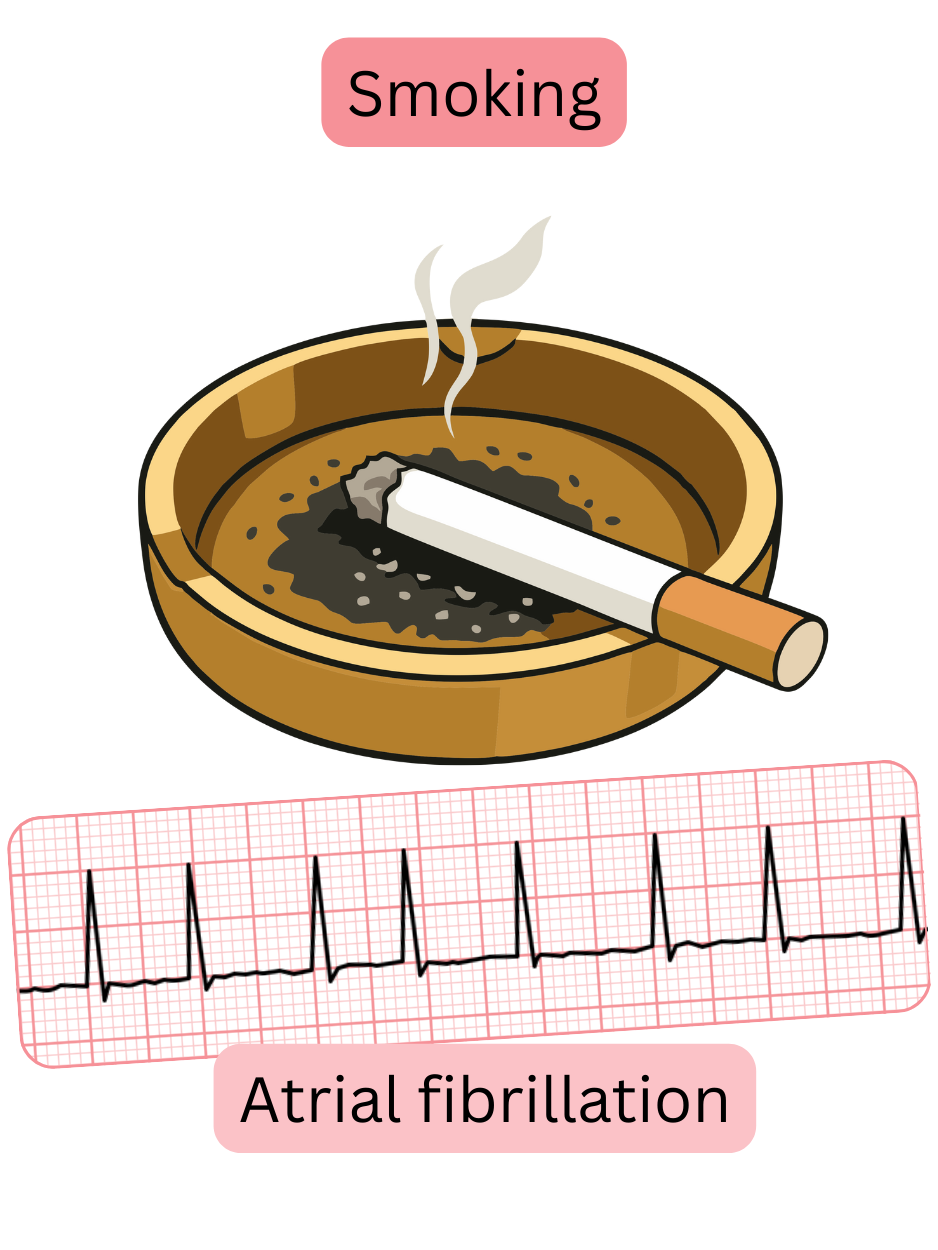
Smoking is one of the major risk factors for pulmonary, oncological, and cardiovascular diseases, as well as atrial fibrillation (AF).
| Smoking | |
|---|---|
Definition
| |
Symptoms
| |
Diagnosis
|
|
Smoking induces chronic inflammation, endothelial dysfunction, and progression of atherosclerosis within the cardiovascular system, leading to organ, myocardial, and atrial ischaemia. This creates a substrate for AF.
The incidence of AF is twofold higher in smokers compared with non-smokers.
| Smoking and Atrial Fibrillation | Class |
|---|---|
| Smoking is one of the major risk factors for pulmonary, oncological, and cardiovascular diseases, as well as atrial fibrillation. | I |
| Smoking is not recommended. | III |
These guidelines are unofficial and do not represent formal guidelines issued by any professional cardiology society. They are intended for educational and informational purposes only.