
Comorbidity (associated diagnosis) refers to the presence of one or more additional diagnoses alongside the primary diagnosis. In our case, the primary diagnosis is atrial fibrillation (AF). Patients with AF frequently have other coexisting diseases (diagnoses), collectively referred to as comorbidities.
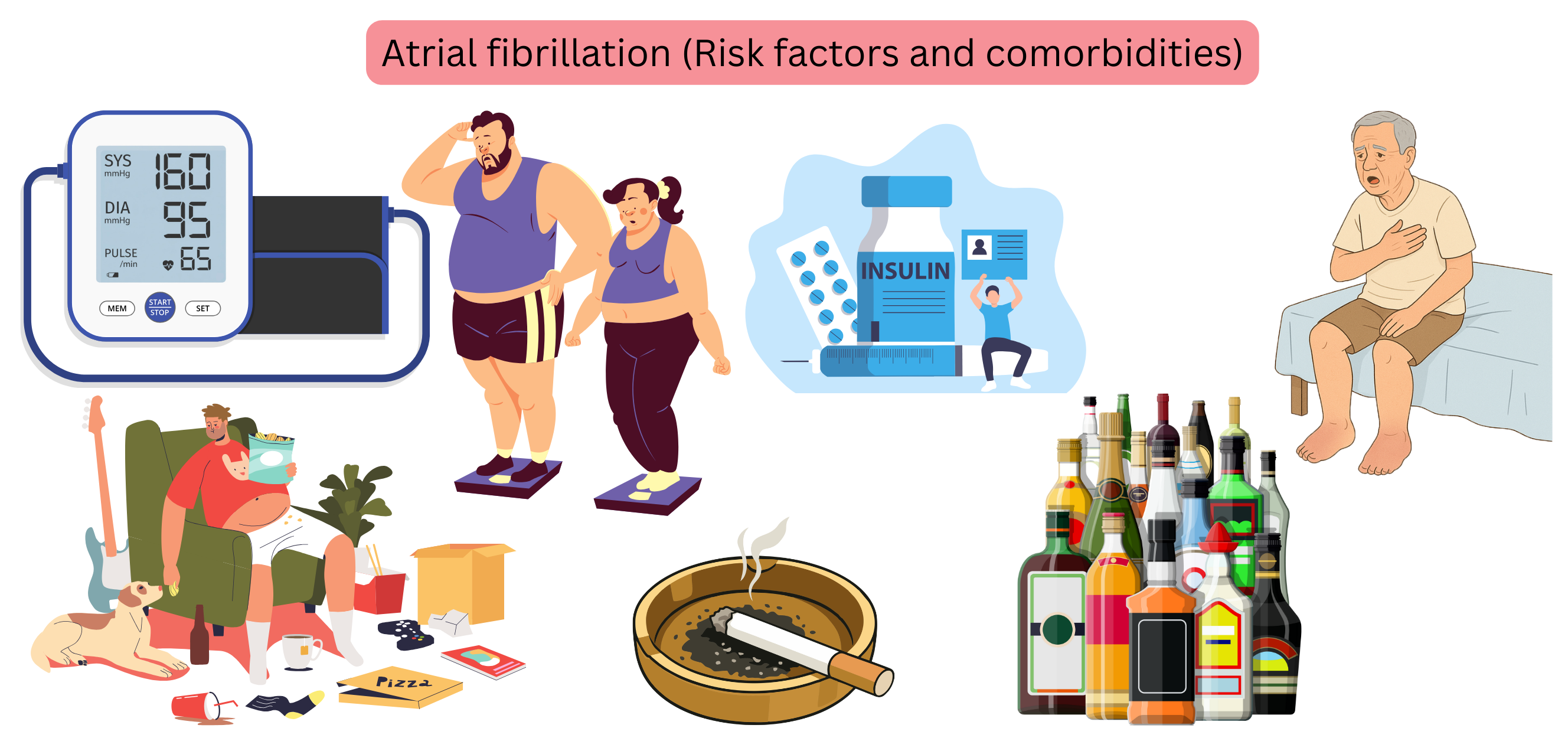
Risk factors for AF include habits and unhealthy lifestyle patterns that increase the incidence of AF and worsen its clinical course, as well as other cardiovascular diseases.
Comorbidities and risk factors increase the incidence of AF and worsen its course (aggravate symptoms and promote AF progression). Adequate treatment of comorbidities and modification of risk factors reduce AF incidence and improve its clinical course.
| Comorbidities and Risk Factors of Atrial Fibrillation | Class |
|---|---|
Diagnosis and treatment of comorbidities (associated diseases) and elimination of risk factors are fundamental components of the prevention and management of atrial fibrillation. Comorbidities and risk factors of atrial fibrillation:
|
I |
Based on data from clinical studies, several comorbidities and risk factors are known to increase the incidence of AF and worsen its clinical course. These include:
These guidelines are unofficial and do not represent formal guidelines issued by any professional cardiology society. They are intended for educational and informational purposes only.